

Ever since Paul McKenna’s ‘I Can Make You Confident’ dictated that as step ONE I should say hello to a stranger, I have known that advice needs to be customised to be useful. As far as that anxious teen was concerned, talking to strangers was the end game, not some casual intro. I can’t help but be reminded of the old meme…
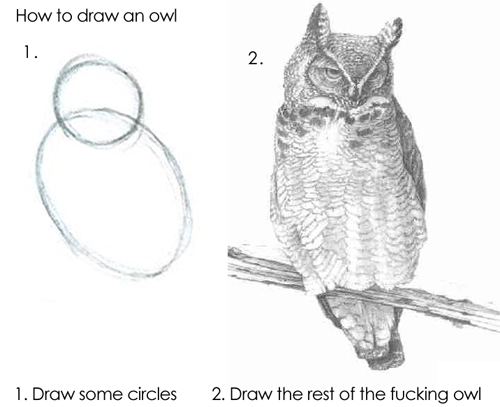
Needless to say, I was not ready.
Since then I’ve seen it time and time again, with online courses insisting that interacting with the ‘community’ of other students is an integral part of my learning (it’s not), or that committing to my new goal by telling everyone I know so they can hold me accountable should I fail is really motivating (I hate it), or that cold showers are a brilliant way to get energized in the morning (cold showers are liquid death).
It seems as though the world and all its experts know what’s best for you, and for many of us it can take a surprisingly long time to realise the obvious – they don’t know you at all.
Exercise may well be proven to help with depression, but for people like me who hate exercise, forcing us to do it will most certainly not help. It will make things worse. We will not be happy.
Sugar may also be advised against given how it affects your brain chemistry, but by god, in all my years of being depressed, chocolate was one of the miracle things that kept my feet on the ground and my head above the water. Even now, I take chocolate much like I take medicine – I’m responsible and informed enough not to go overboard with it, but whenever I could really do with a little something to perk me up or comfort me, I have a square, or a bar, or a cup. Or sometimes for no reason at all. What can I say, I’m a rebel.
The trouble is that we have everywhere authoritative headlines like ‘Exercise Proven to Help with Depression’ and ‘How to Lose Fat Fast’. What we don’t have is the full story – the 20% or so of people tested for whom exercise didn’t help or even made things worse; the background of the incredible variances in human bodies that leads to such differences in weight regardless of diet, in how quickly we can lose weight when we try and in what foods we’re intolerant to and how specifically those intolerances manifest.
Instead, we see the headline and assume things are this way for everyone. If the guru can’t make me confident then it’s a failing in my willpower. If you don’t take the generic advice for treating depression or losing weight then it’s your fault that you’re depressed or fat, even when you’ve already sincerely tried what they say. It can be very damaging and very lonely
But it’s all bollards. You are the only one who gets to say what works and what doesn’t for you, even (and I realise how dangerous this is to say) in the face of science. When you see your doctor, it’s a collaborative effort between two experts – one in generic health and medicine, one in your specific body and experiences. Never take it for granted that either of you knows better than the other.
So listen to people, try things out with both an open mind and a healthy skepticism, keep what works and forget what doesn’t. And next time you see someone outlining the ideal morning routine, what the ‘right’ way to learn a language is or recommending the diet that worked for them, just remember what the originator of tests such as the Myers-Briggs Type Indicator had to say about them:
Every individual is an exception to the rule. Therefore, one can never give a description of a type, no matter how complete, which applies to more than one individual despite the fact that thousands might, in a certain sense, be strikingly described thereby. Conformity is one side of a man, uniqueness is the other.
Carl Jung
I’m no INFP – I’m a Harri

 Zen-ish